1. The Client Brief & Challenge
The customer produces custom blends of powdered food ingredients. Its existing smaller blender and platform restricted batch size and pallet staging, while loading and cleaning were difficult. The new system had to fit a defined production area and provide a robust, accessible blending process within a limited budget.
- Larger batches: The system needed to accommodate larger powder blends, with batch mass dependent on the bulk density of each formulation.
- Practical loading access: Operators needed space to stage ingredient pallets and load bags through a sieve without adding another standing platform above the main deck.
- Cleaning and operator protection: The brief called for food-safe construction, accessible cleaning, dust extraction and safeguards around the blender and elevated pallet-loading area.
- Space and programme constraints: The layout had to fit the allocated room, with delivery requested in under five months.
2. The Process Plant Network Solution
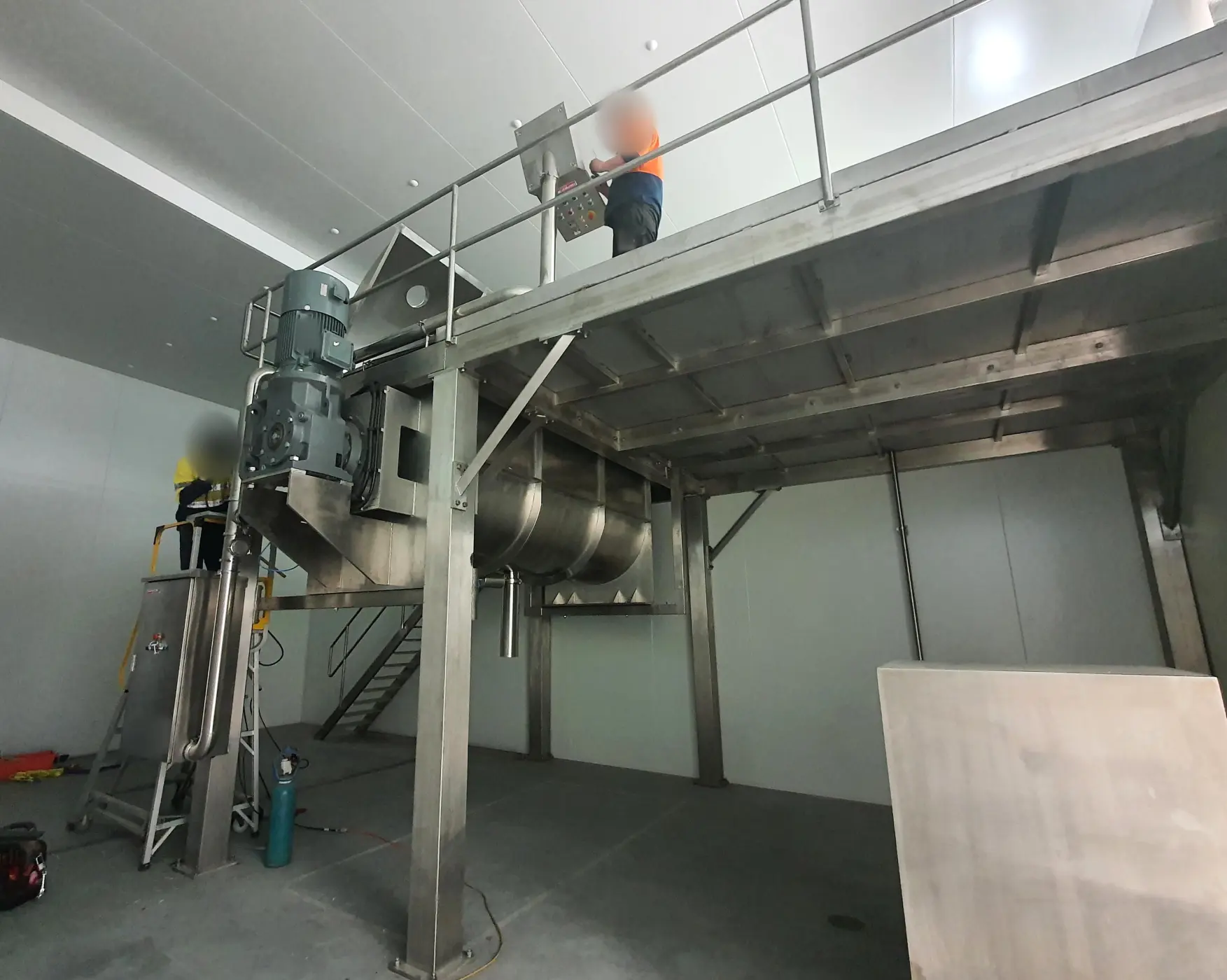
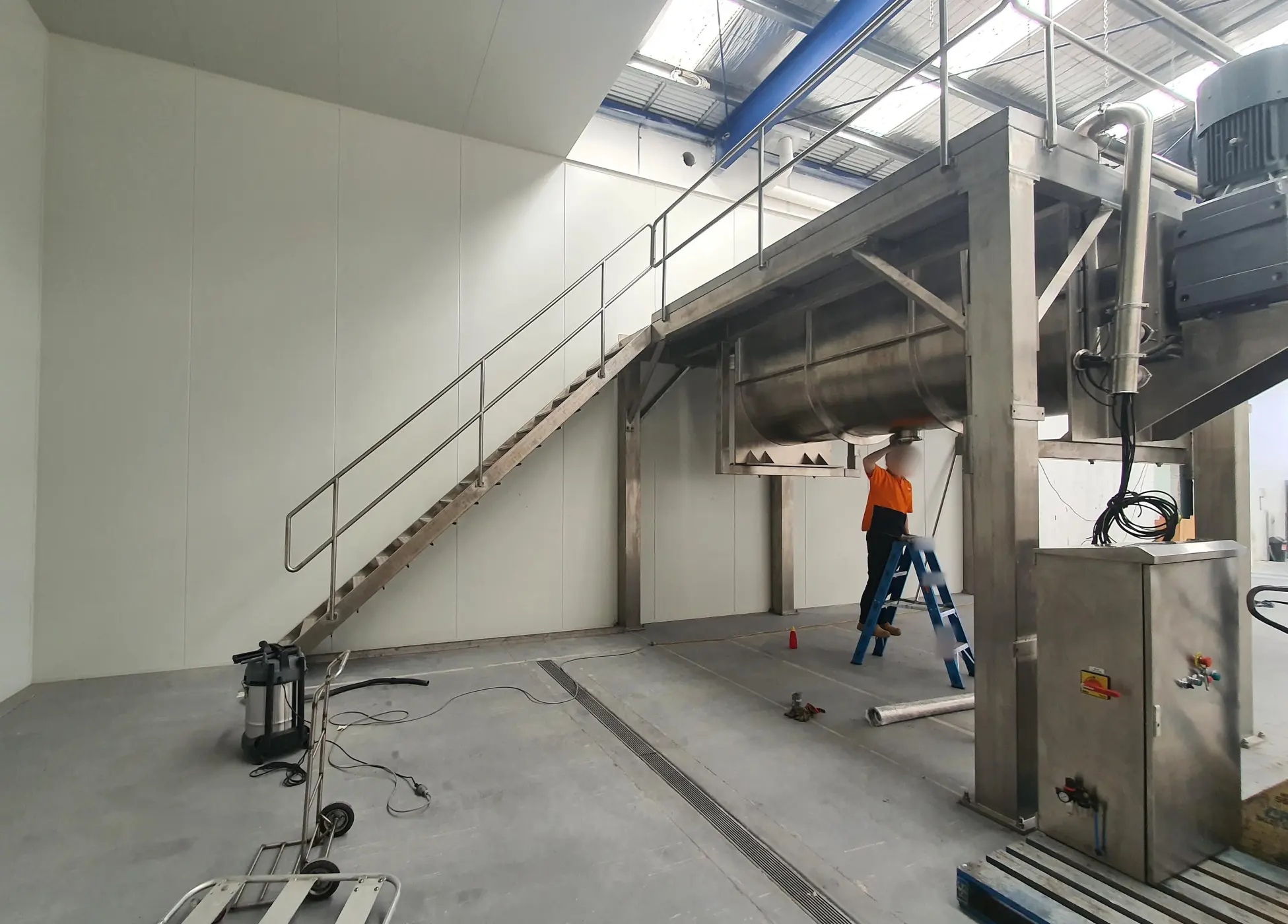
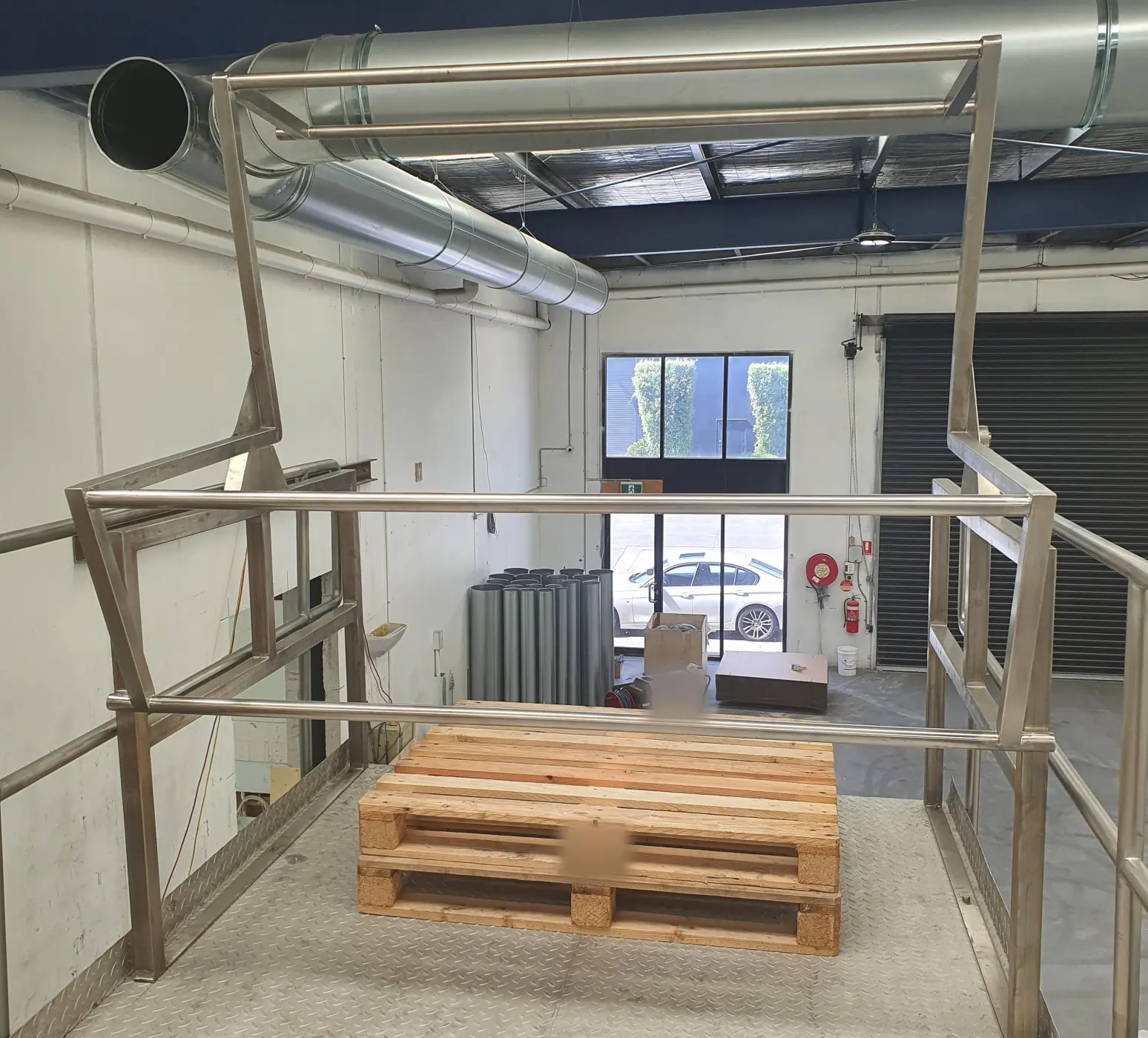
PPN combined a new IOPAK heavy-duty double-helix ribbon blender with a custom platform and cradle. Recessing the blender into the deck brought the bag-dump and sieving arrangement to approximately waist height for operators. A forklift delivers pallets to a pivoting safety gate at the platform edge; a pallet jack moves them across the deck to the loading station.
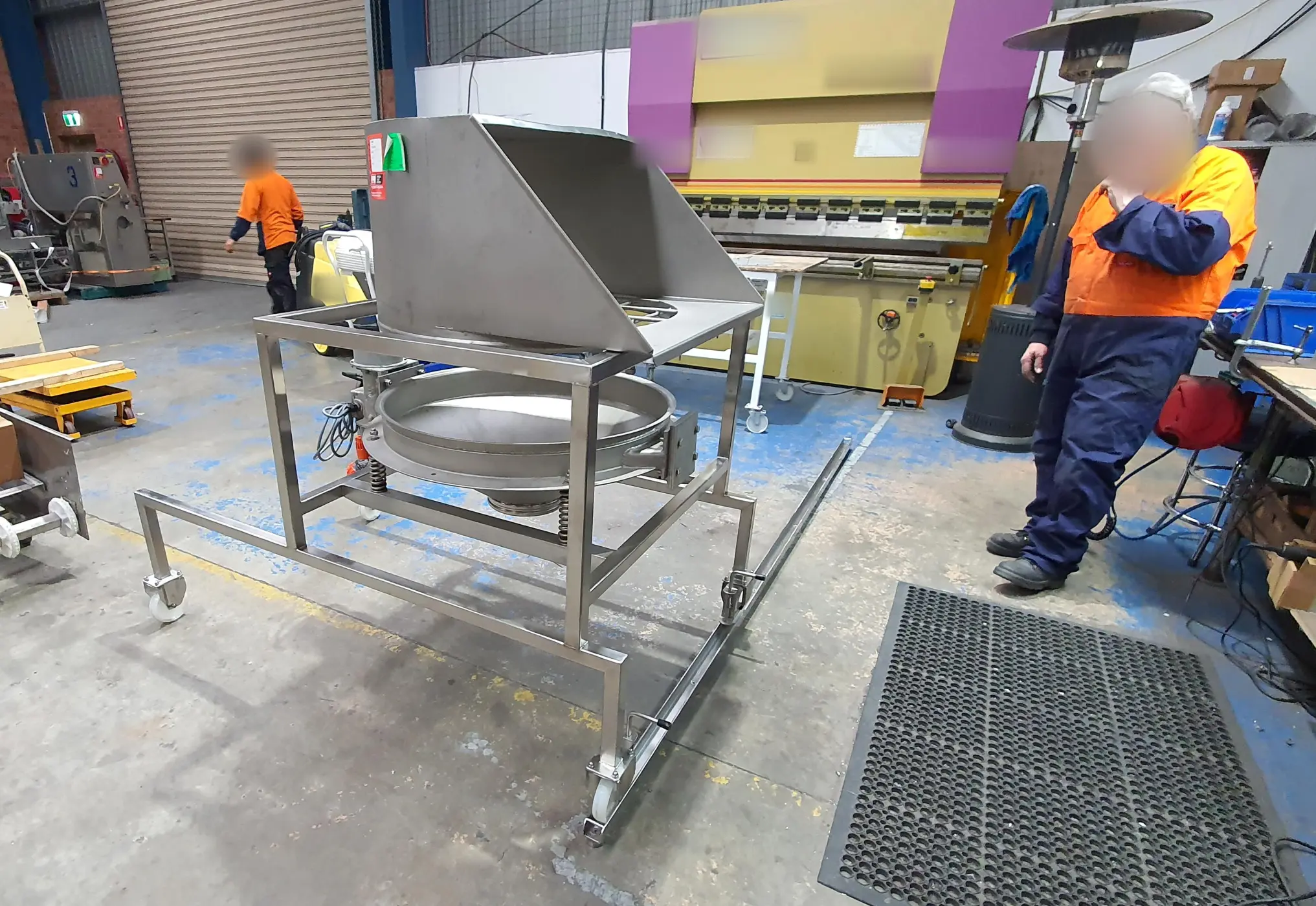
Ingredients pass through a vibratory sieve before entering the blender through flexible BFM fittings. The loading assembly can move aside to provide access to the blender lids. Dust extraction supports powder handling, while a bulk bag stand beneath the discharge supports filling bags in the 500–1,000 kg range.
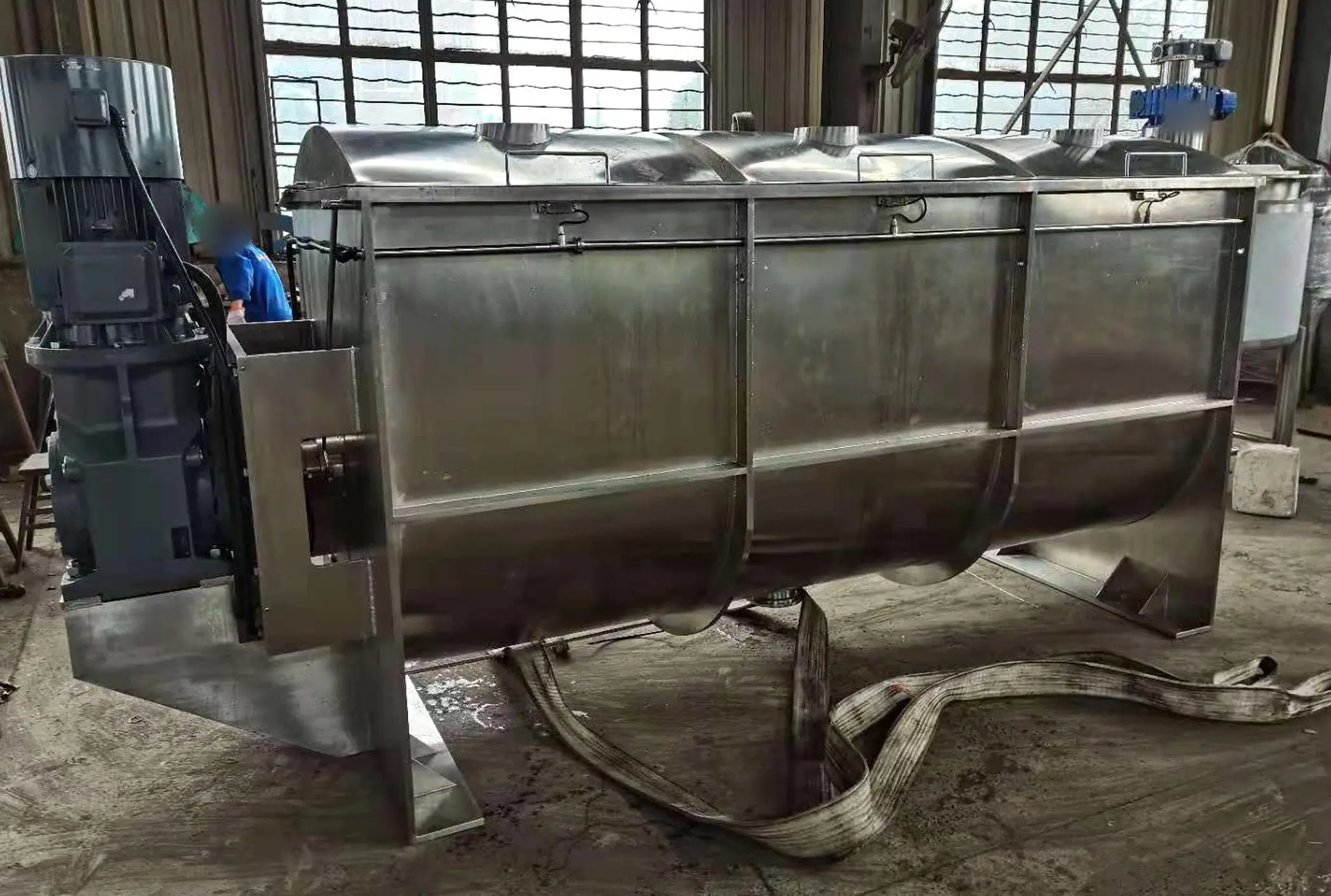
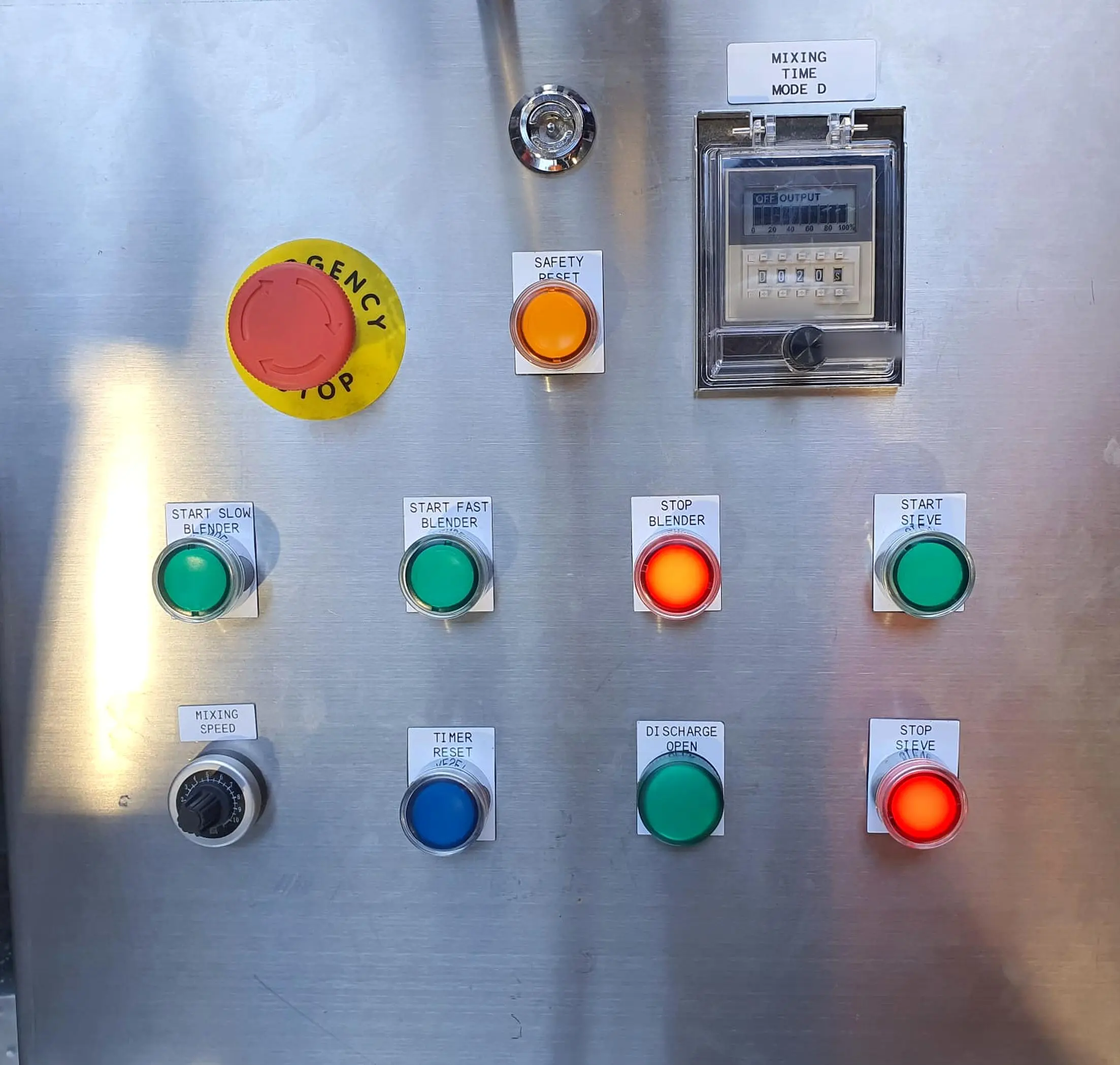
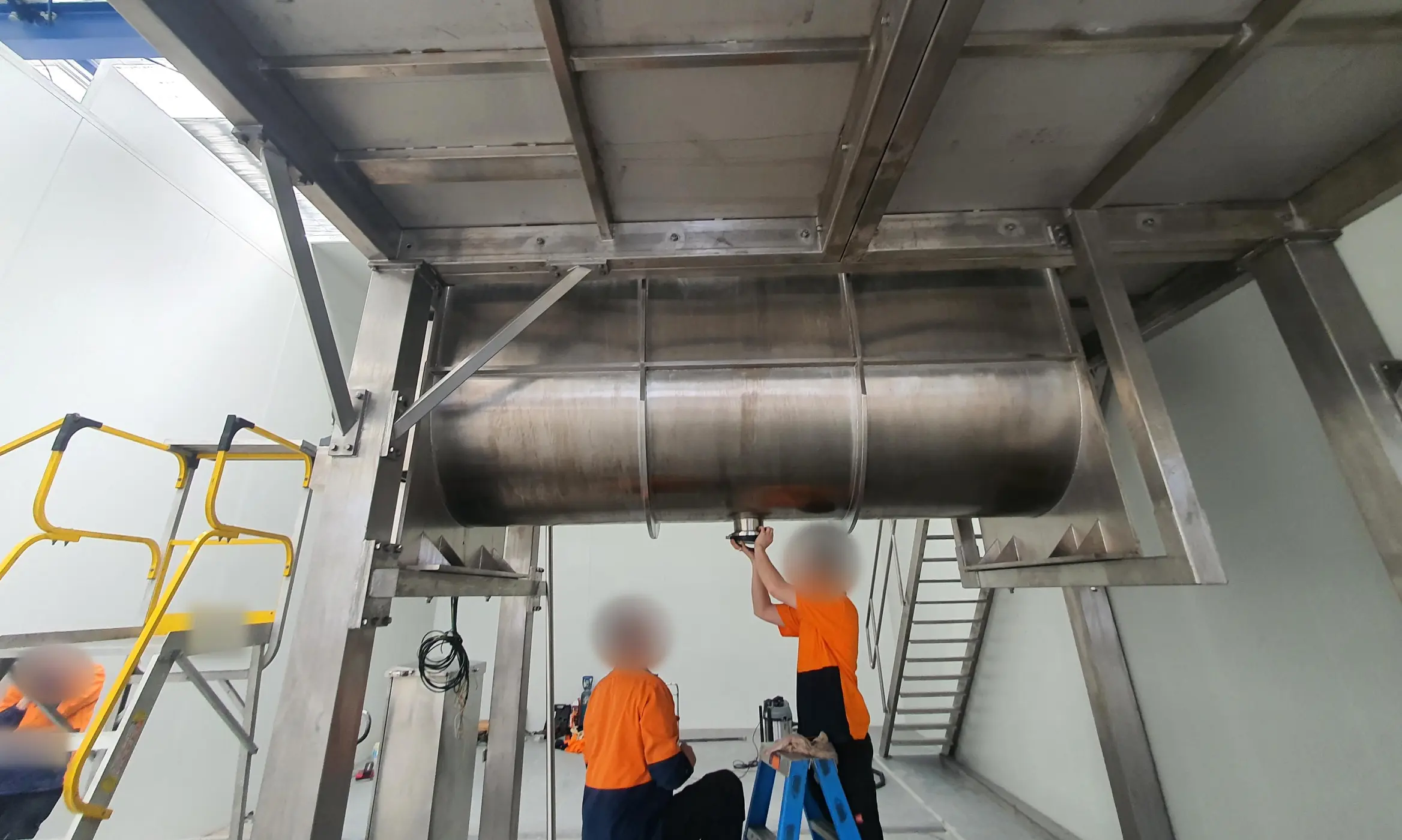
The stainless steel platform uses fully welded surfaces, rounded kick plates and drainage points. Raised supports allow coving beneath the legs for floor cleaning. The blender has three gas-strut-assisted lids and an interlocked safety grid; dual-channel interlocks and a monitoring relay form part of its protective controls. A variable-speed drive and separate operator panel provide control from the platform.
System Equipment Composition
New Equipment
- 3,500 L IOPAK heavy-duty double-helix ribbon blender with variable-speed drive.
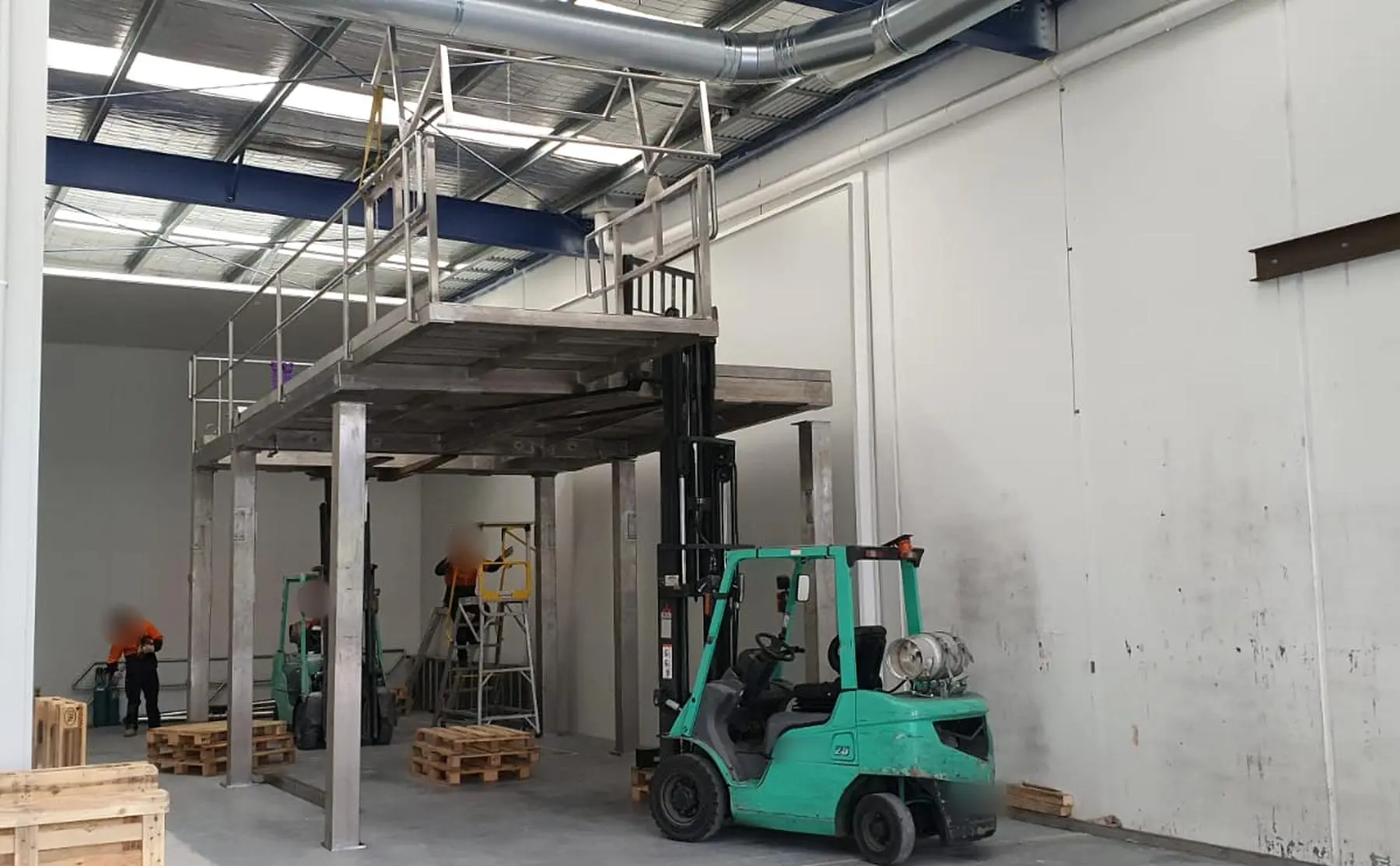
- Custom stainless steel platform and recessed blender cradle, with stairs, handrails, kick plates and pallet-loading safety gate.
- BFM flexible connections and dust extraction for powder loading.
- Main electrical cabinet and platform operator panel, with safety interlocks and monitoring relay.
- Bulk bag stand beneath the blender discharge.
Customer Supplied Equipment
- Customer-owned loading and sieving assembly, modified by PPN.
- Separation panelling and closure at the pallet-loading opening.
Proof of Concept & Workshop FAT Testing
Factory acceptance testing took place at PPN before installation.
3. Implementation & Timeline
Design and quotation — approximately 3–4 weeks
The layout was developed in 3D during design and quotation, before the order was placed.
Machinery manufacture — approximately four months
Following the order, machinery manufacture had a lead time of approximately four months.
Workshop testing and preparation for site
Factory acceptance testing at PPN preceded installation of the system in the new production area.
Installation — approximately 2–3 weeks
The large platform arrived in sections and was assembled, welded and polished on site. Installation took approximately two to three weeks in a new production area while the customer continued its existing operations.
4. Results & Business Impact
- Larger blending batches: The new system increased batch capacity beyond the customer’s smaller blender. Indicative batch mass is 1.5–2.5 tonnes, depending on product bulk density.
- Faster loading and unloading: Pallet staging, loading at approximately waist height and discharge into bulk bags improved handling around the blender.
- Easier cleaning: The welded stainless steel platform, drainage points and coved support details improved cleaning access and allowed water washdown.
- Expansion alongside existing production: The system was installed in a new production area while the customer continued operating its existing process.